3 Terrifying Autumn Horror Stories That Stayed With Me | Horror Story Animated
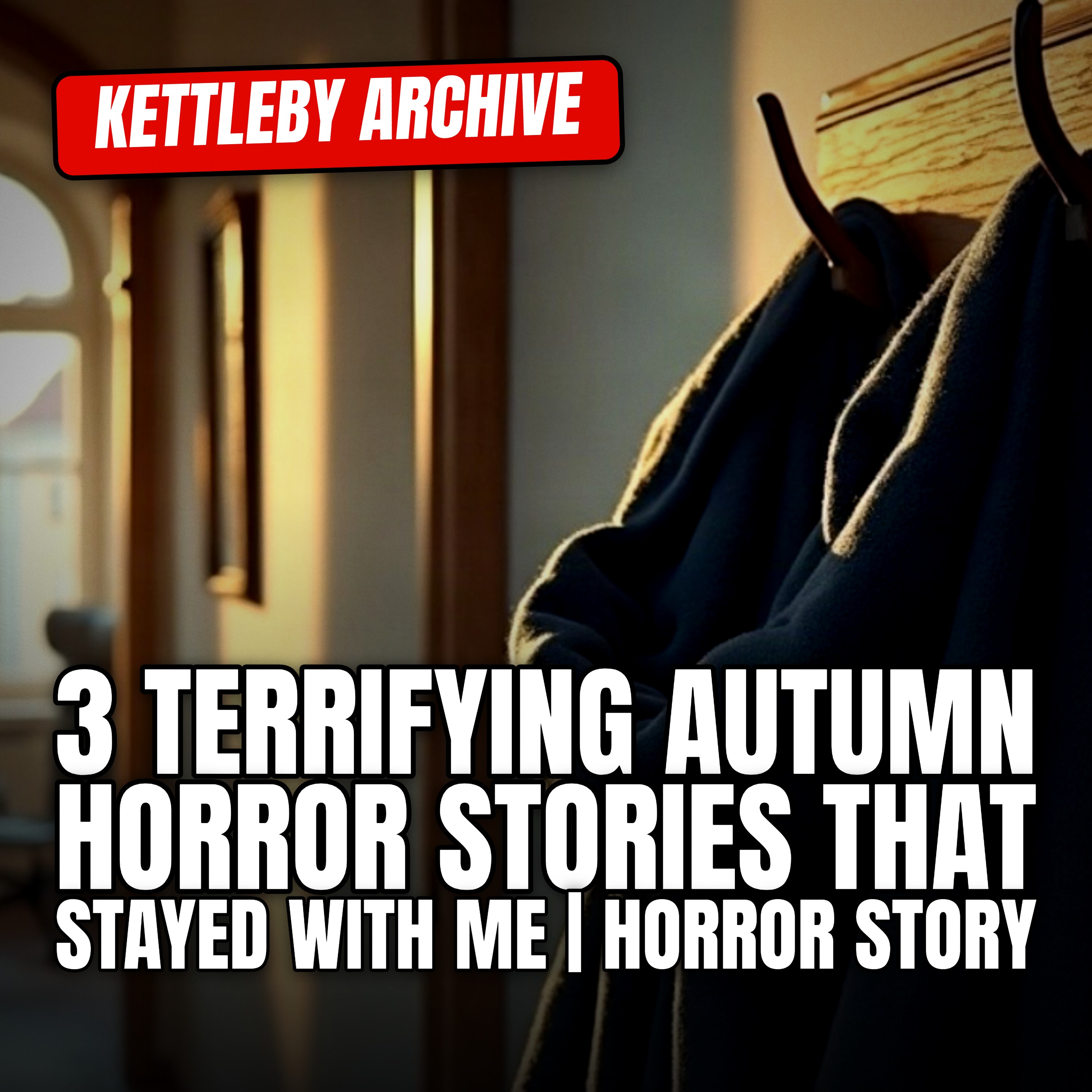
That scarf should have been dusty. A cottage empty since August, and the woollen scarf on the hook inside the door was damp, worn that same morning, hung carefully before we arrived. The thermostat read nineteen degrees. Someone had left the heating on. For us, or for themselves?
📖 Free book of Kettleby Archive files: https://louloubooks.com/horror/free?ref=podcast
Chapters:
0:00 Two Keys, One Cut
1:12 Clay on the Sill
2:20 Nine Seconds of Breathing
3:06 Two Fourteen, From Outside
4:12 He Already Knew
5:22 Nothing Useful on Camera
6:32 He Already Knew Their Names
7:38 Prints Stopping at the Step
8:47 Still Standing in the Birches
Written and narrated by Alice Kettleby.
Original fiction — names, places and events are invented.
Chapters
- Two Keys, One Cut
- Clay on the Sill
- Nine Seconds of Breathing
- Two Fourteen, From Outside
- He Already Knew
- Nothing Useful on Camera
- He Already Knew Their Names
- Prints Stopping at the Step
- Still Standing in the Birches
Read the story
That scarf should have been dusty. A cottage empty since August, and the woollen scarf on the hook inside the door was damp, worn that same morning, hung carefully before we arrived. The thermostat read nineteen degrees. Someone had left the heating on. For us, or for themselves?
Ryan laughed it off. I stood in the doorway counting the rooms, sitting room, kitchen, two bedrooms, one narrow stair. Both keys were in my hand. So I told myself: old pipes, old boiler, nobody here. But I checked every cupboard before I unpacked. Who was in that bedroom? Ryan was behind me in the kitchen doorway.
I had my phone out for signal at the burn path. The bedroom window glowed warm amber. A silhouette stood at the glass, motionless, facing outward. Then Ryan said my name from six feet behind me. Morning. A thin smear of red clay crossed the inside of the kitchen windowsill, not outside, inside.
The sash was raised two inches. Ryan said pine marten. But the clay was boot-shaped at one edge, a heel-curve pressed into the paint. Pine martens don't have heels. Day three. Seven a.m. The back-door bolt was drawn, I had thrown it myself before bed. A single boot-print in the mud faced the door.
I stood there counting: five days left, fourteen hundred pounds non-refundable, last bus Sunday. I said yes to staying. I am still sorry for that. Ryan said we should stay. Fourteen hundred pounds for the week, paid in full, non-refundable. The last bus south left Sunday. I said yes.
I told myself it was practical. But if I am honest with you, and with myself, I chose money over instinct. That is the part I still cannot forgive. Ryan propped his phone against a jar to record the back door overnight. Morning: the footage ran fine until three forty-seven. The handle dipped, slowly, from outside.
But the lens caught only the frame and not the face. Then nine seconds of breathing. Faint, steady, almost patient. Then silence, and the handle lifted again. We stepped out to the burn path at half seven, fresh air, Ryan said. Eleven percent battery left on my phone. Back inside, I glanced at the mantelpiece.
The spare key the agency sent was still there, but an inch closer to the edge than I had left it. I didn't mention it. At two-fourteen the handle turned. We had just come back in from the garden, both keys were with us, both now inside. Ryan braced his shoulder to the door. Through the letterbox came a voice, low and close, saying my name.
Just my name, twice. I picked up the landline. Police found a sleeping bag, tins of food, and a handwritten note in the woodshed. It listed our arrival date and our car registration. A detective called two days later and promised a follow-up call. That second call never came. Sometimes I wonder what she found that made her stop.
What would you do if a stranger already knew your name before you'd spoken a word? My name is Rhiannon. Early November, solo, twelve miles of Cumbrian moorland. I had walked it twice. What I hadn't noticed either time was how completely alone you are out there. At the four-mile waymarker a man in a green waterproof fell into step beside me.
Friendly, unhurried, knew the path well. He mentioned a short-cut around the next ridge. Then he used my name. Not from a badge or label. Just my name, easy and familiar, as though we had met before. We had not. I caught a smell from the man as he moved ahead of me near the second ridge, solvent, sharp and chemical, clinging to the cold air.
Then I checked my OS map and stopped cold. Two wooden waymarker posts had been turned in their sockets, pointing twenty degrees off. My phone showed nine percent battery. The quarry was that direction. He reappeared at the false waymarker, hands easy at his sides, offering to lead me to the car park.
The mist was down hard. Nine percent battery. Light draining at half past three. I followed him. I am not proud of it. Fear of the dark beat every other instinct I had. The track sank between two old spoil heaps. Mist sealed the entrance behind us like a curtain drawing shut. I raised my phone and tried three times to photograph his face.
Every single time he turned at exactly the wrong moment, shoulder and hood filling the frame. The camera caught nothing useful. Then the track opened onto the lane where I had left my car that morning. I breathed out for what felt like the first time in an hour. The man was simply gone.
No corner, no gate. Just gone. Then, from behind the spoil heap, a voice began reciting numbers. Flat. Patient. Getting closer. Key in the lock. A hand settled on my shoulder from behind. He said, quietly, that he had been walking these hills a long time. Then a shout. A farmer named Ewan, checking his dry-stone wall forty yards along the lane, bellowing across the cold air.
The man stepped back. Walked away without hurrying. Police found the repositioned posts and boot prints following Rhiannon's from the two-mile mark all the way. A ranger said three walkers that year reported a man who already knew their names. Nobody was ever charged. I have read Rhiannon's account four times and I still cannot explain how he knew.
That was Rhiannon's account. This next one belongs to my neighbour Ned. He still cannot speak about it, so I am. October, a Yorkshire market town, his daughter Gracie was seven. Before I go on, every name in these three stories was already known before anyone introduced themselves.
Three mornings running Ned found the back door unlatched. Gracie said she opened it to hear the birds. He fitted a bolt at adult height and told her firmly not to touch it. Then he saw a muddy palm-print on the outside of the glass. Too large for Gracie. Too low for an adult standing upright.
After heavy rain the garden told everything. Gracie's prints tracked to the fence and back. A second set, large, stopped two feet from the back step. Police said a dog-walker, an accident. Ned stood in the wet grass holding his phone, photographs clear as daylight. Then he thought: how many mornings before the rain?
At five forty-one Ned woke to torchlight crossing his ceiling. Back door open. Gracie at the fence, talking. The shape on the embankment slid into the scrub the instant he appeared. She said it came every morning. It knew her name, her teacher's name. It had been inside, she said.
It had signed her drawing. Police found the shallow camp. Food wrappers dated six weeks back. And Gracie's drawing, a crayon house, a fence, a girl. In the bottom corner, in adult biro, one word and a date: her name, and the day she started school. She had never shown that drawing to anyone.
It had been taken from her room. Ned moved Gracie's room to the front and had a steel door fitted before November was out. Twice since then, in early mornings, I have seen a shape standing perfectly still among the birch trees on that embankment. Last week it was there again. It was facing my window.
This story is fiction: names, places and events are invented.
A free book
Eight Kettleby Archive files as a free book, one of them never told anywhere else, and the Horror Club by email.
Get it →The horror books
Alice Kettleby's books, sold directly by the press that publishes them.
Browse →The Kettleby Archive: The First Files. Eight files as a PDF and EPUB, one never told anywhere else. The link comes by email.