Kentucky Goblin Attack: The Farmhouse Siege Nobody Could Explain
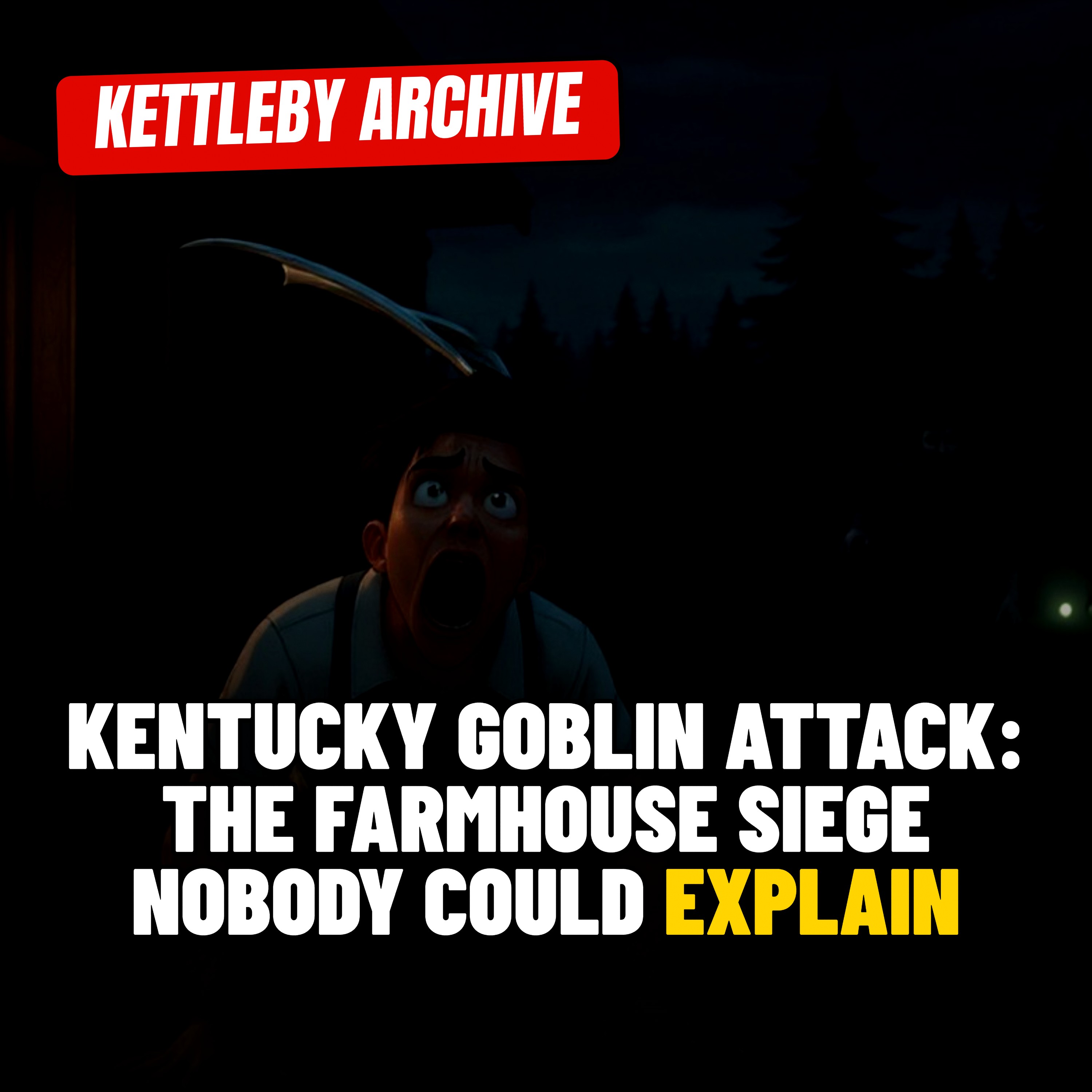
The Kentucky goblin attack of 1955 is one of the strangest real UFO cases ever reported — and this is the full story, told straight.
Chapters:
0:00 The Hand on the Roof
0:34 Kelly Farmhouse, 1955
1:27 Billy Ray Sees Something
2:13 The Creatures Appear
2:40 The Men Open Fire
4:14 The Family Makes a Run
4:41 Police Arrive
5:02 Officers Search the Farm
6:48 The Press Distorts the Story
7:08 What the Investigation Found
Written and narrated by Theo Penrose.
#KentuckyGoblinAttack #KellyHopkinsvilleEncounter #UFOEncounters
Chapters
- The Hand on the Roof
- Kelly Farmhouse, 1955
- Billy Ray Sees Something
- The Creatures Appear
- The Men Open Fire
- The Family Makes a Run
- Police Arrive
- Officers Search the Farm
- The Press Distorts the Story
- What the Investigation Found
Read the story
Billy Ray Taylor steps out under the little roof at the back of the farmhouse. It is dark, and the house is full of frightened people. Then something reaches down from the edge of that roof. A hand, with claws, coming for his hair. The others grab him and drag him back inside. Out in the Kentucky night there is a glow moving between the trees.
And this house has no telephone. The farmhouse stood at Kelly, a scatter of farms about eight miles north of Hopkinsville, Kentucky. It was rented, three small rooms, unpainted, with no running water, no radio and no television. Glennie Lankford, a widow of fifty, lived there with her three youngest children, Lonnie, Charlton and Mary.
That Sunday evening the house was full. Her grown sons, Lucky and J.C. Sutton, were there with their wives, Vera and Alene. So was Alene's brother, O. P. Baker. And there were two visitors from Pennsylvania: Billy Ray Taylor, twenty one, and his young wife, June. Billy Ray and Lucky had worked the carnivals together.
It was August 1955, deep in the Kentucky countryside. At about seven o'clock, Billy Ray went out to the well in the back yard for water. He came back in with a story. A silvery object, he said, real bright, with an exhaust all the colours of the rainbow. It came over without a sound, passed over the house, and dropped down into a gully not far away.
The family laughed at him. Nobody went out to look. About an hour later, the family dog started barking. Then it stopped. It crawled under the house with its tail between its legs, and it stayed there until the next day. Lucky and Billy Ray went to the back door to see what had frightened it.
Out across the fields, there was a glow. And it was coming towards the house. Inside the glow was a figure about three and a half feet tall. Its head was huge and nearly round. Its arms hung almost to the ground and ended in talons. Its eyes were far bigger than a man's and shone yellow, and its whole body looked like silver metal, giving off its own light.
Its hands were raised. And it was walking, slowly, towards the back door. When it was about twenty feet from the house, the two men fired. Lucky had a twenty gauge shotgun. Billy Ray had a twenty two rifle. The thing went over backwards. It did a flip, the family said, got back up, and scurried away into the dark.
For a moment there was nothing out there at all. It did not stay gone. Later, the same kind of figure was at a side window, looking in. The men fired straight through the metal screen. Again it flipped over and vanished. The children were sent to hide. Glennie would describe it afterwards in plain farm words.
It looked, she said, like a five gallon gasoline can, with a head on top and small legs. That was when Billy Ray stepped under the roof at the back, and the hand came down for him. Once they had pulled him in, Lucky went out and fired up at the roof. Another of the figures was sitting in a tree.
When it was hit, it fell from the branch. Then it got up, and it ran for the woods. The family said these things did not move like anything they knew. Their legs seemed not to bend the right way. They seemed to float, from the trees to the roof and back down. When the bullets hit them, it sounded like bullets striking a metal bucket.
And every time the guns drove them off, they came back. Up on the roof, the family could hear scratching. For hours it went on like that. Gunfire, then silence. A glow at a window. Scratching overhead. There was no telephone to call anyone, and the nearest help was eight miles away in town.
By about eleven o'clock, nobody in that house could take any more. They ran for their two cars, crammed themselves in, and drove south to the police station in Hopkinsville. The police chief, Russell Greenwell, looked at the people who came through his door. These aren't the kind of people, he said, who normally run to the police for help.
One of the men was so frightened that his pulse was measured at one hundred and forty beats a minute. Greenwell called for help, and the family were taken back out to the farm. Four city police officers. Five state troopers. Three deputy sheriffs. Four military police from Fort Campbell, the Army base nearby.
A photographer from the local paper. They searched the house and the yard while the family waited outside. In the dark, somebody trod on a cat, and it screamed. You never saw so many pistols unholstered so fast in your life, Greenwell said. They found shotgun shells. They found broken windows and holes in the screens, one of them small and square.
Along the fence, where the men said they had shot one of the figures, there was a patch of grass glowing faintly in the dark. They found no creature, and no craft. Glennie told them liquor was not allowed in her house, and the officials agreed nobody had been drinking. At around two in the morning, the police left.
The family went back inside the farmhouse. There was still no telephone. Town was still eight miles away. Glennie lay down in her bedroom. In the small hours, she saw a glow at the window beside her bed. One of the figures was right outside, with its clawed hand resting on the window screen.
They had come back. The visits went on through the rest of the night, until just before dawn. Then they stopped. And they never came back to that farm again. The next day, officers searched for a landing place, for footprints, for blood. They found nothing. A man from a local radio station, Bud Ledwith, sat with the adults and drew the creatures as they described them.
Then the story reached the radio and the newspapers, and from there the national press. The local paper raised the number of creatures to twelve or fifteen, though the family never saw more than two at once. Nobody in the house had ever said they were green. That colour was added later, by the press.
Hundreds of strangers drove out to Kelly to stare and to laugh. The family put up No Trespassing signs, and the crowds ignored them. So they began charging fifty cents to come onto the land. Neighbours said that before long, the family packed up and left the farm. In town, people mocked them, and some called them fortune seekers.
The next year, an investigator named Isabel Davis came to Hopkinsville. It took a great deal of coaxing before Glennie would speak to her. Davis noticed that Lucky and Billy Ray had spent the day after the siege apart, and still their descriptions matched. With Ted Bloecher, she wrote a report of nearly two hundred pages, and found no sign of a hoax, a publicity stunt or a shared hallucination.
The Air Force's Project Blue Book filed the case as a hoax, with no further comment. Sceptics have another answer. Joe Nickell and Brian Dunning point to great horned owls. They hunt at night, fly almost silently, have big yellow eyes, stand about two feet tall, and attack anything near their nests.
A meteor was seen that evening, which could explain Billy Ray's light. And the glowing grass fits foxfire, a fungus that shines in the dark. There are other doubts too. Some neighbours heard only a few shots that night, and some heard none at all. Two psychologists have suggested drink might have played a part, even though the officers saw no sign of it.
Moonlight on feathers can look like silver. These are fair questions. In more than seventy years, none of them has been settled. Kelly holds a festival every year now, called Little Green Men Days. But there was nothing funny about that night for the people inside that farmhouse.
The police found shells, broken screens and grass that glowed. They never found what the family had been shooting at. A man stood under a roof in the dark, and something reached down for his hair. What do you think was really waiting on that roof?
This story is fiction: names, places and events are invented.
A free book
Eight Kettleby Archive files as a free book, one of them never told anywhere else, and the Horror Club by email.
Get it →The horror books
Alice Kettleby's books, sold directly by the press that publishes them.
Browse →The Kettleby Archive: The First Files. Eight files as a PDF and EPUB, one never told anywhere else. The link comes by email.